Advancing the HKJC Grant Management Experience
Overview
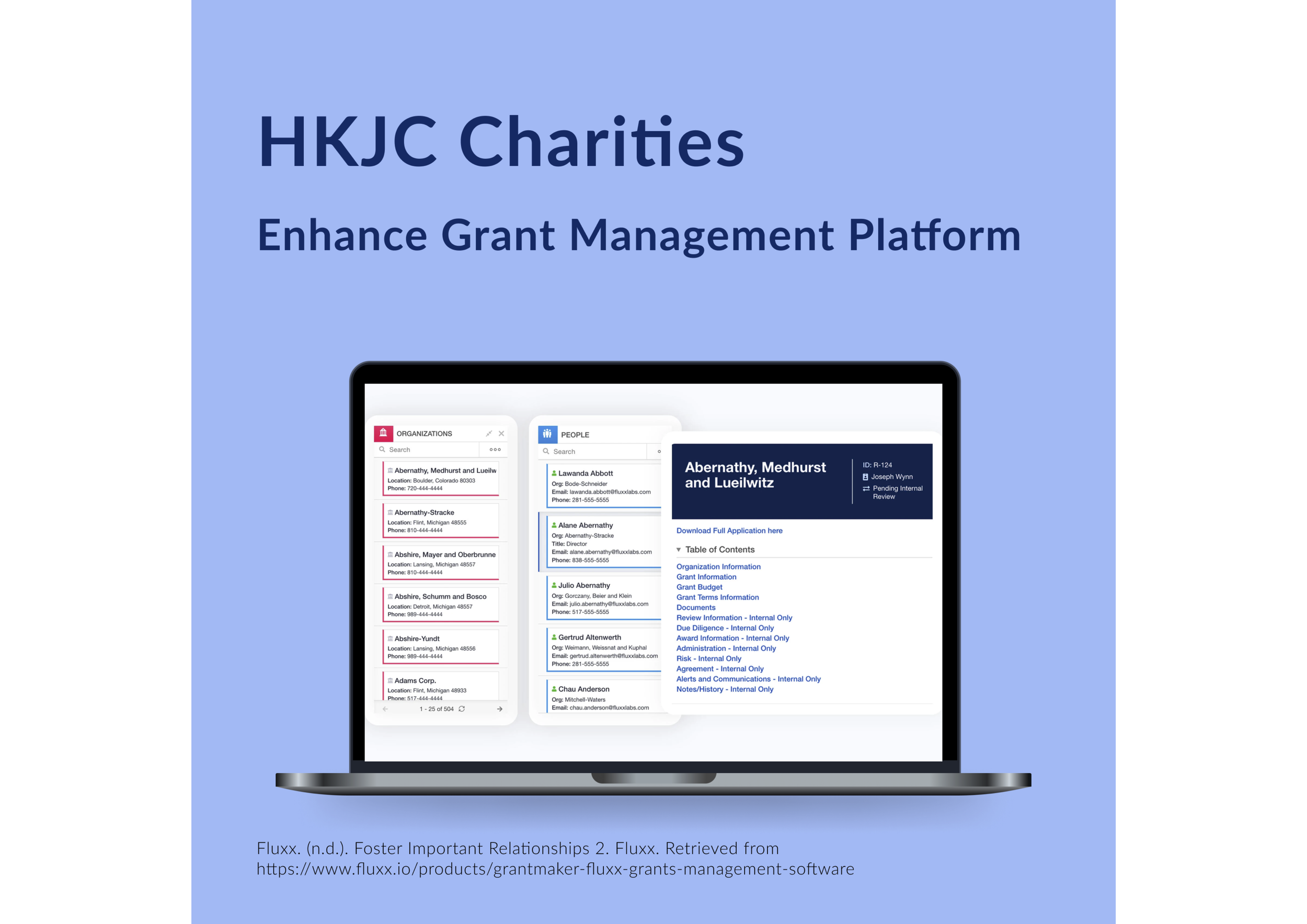
This project addressed the challenge faced by the Hong Kong Jockey Club Charities Trust in streamlining operations. Our goal was to enhance their platform, enabling direct grantee participation, reducing staff workload, and digitizing document processes.
Timeline
Oct 2021 - Feb 2022
Team
1 Product Manager
1 Project Manager
1 Developers
My Role
Business Analyst
Problem
The Hong Kong Jockey Club Charities Trust, one of the world’s top ten charity donors, aimed to improve its platform for daily administration work, including grant applications, transactions, performance reviews, and grantee management. The existing platform was used exclusively by HKJC staff, lacking grantees' involvement. The project aimed to enhance communication between charity staff and grantees, reduce staff workload, and digitize documents for increased efficiency and environmental sustainability.
Target Users
Staff of Hong Kong Jockey Club Charities Trust.
Grantees who submit applications and documents.
Design Process
Emphasize
User Interview
We conducted multiple user interviews with grant management staff, delving into their daily operations, workflow, communication with grantees, and identifying pain points in the existing system. This firsthand information played a crucial role in shaping solutions, ensuring the enhanced platform effectively addressed user challenges and operational needs.

Photo by Jason Goodman on Unsplash
Define
Workflow Analysis
After conducting user interviews, we gained insights into their workflows and usual practices. Using transactions as an example, let's delve into the workflow detailing how the operations staff processes payments to the grantee.
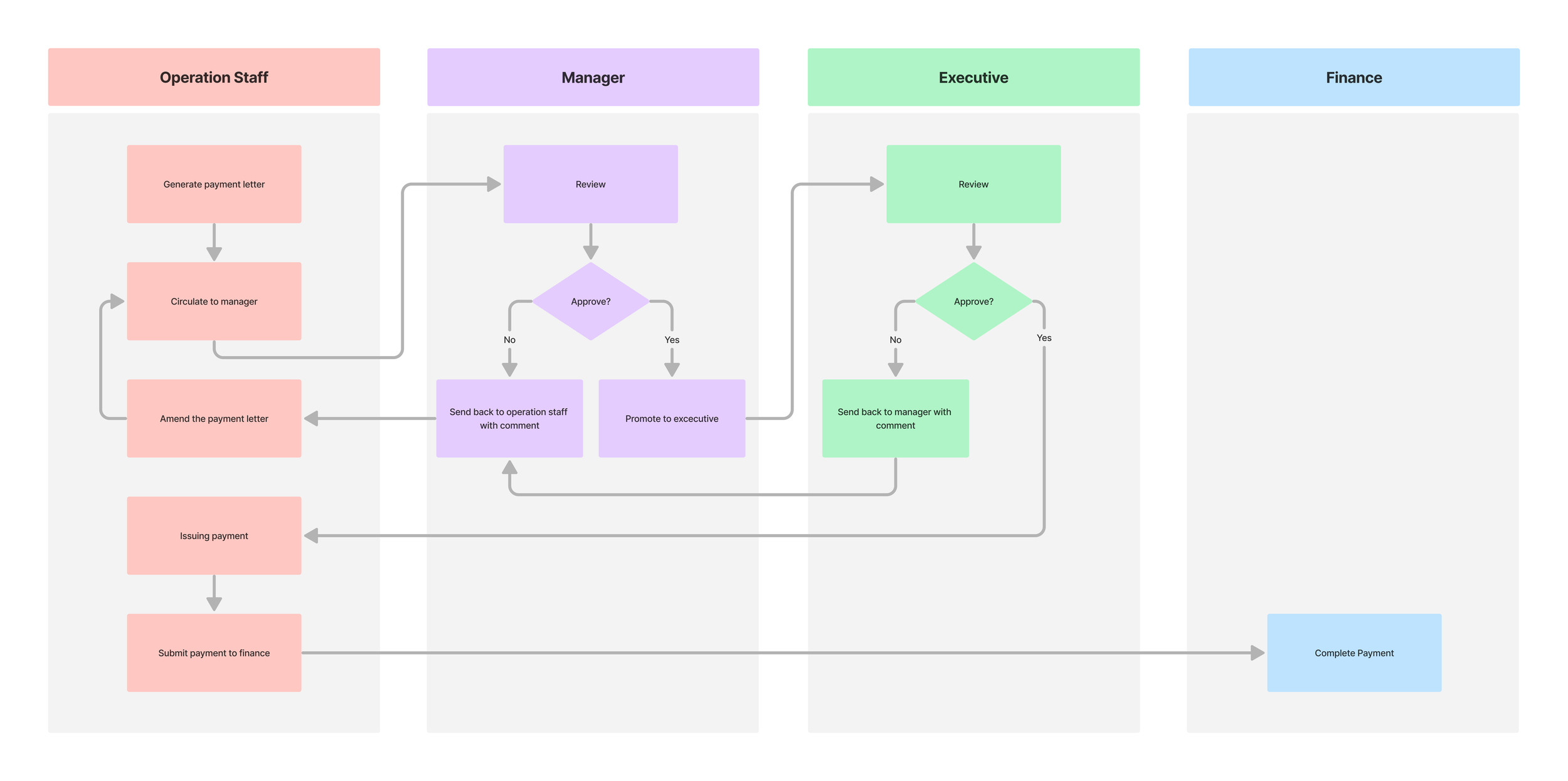
Major Identified Problem:
How to make the approval process easier for managers and executives?
How can we streamline the payment processing for finance, given that payments are processed on a weekly basis?
Ideate
Ideation Workshop
We conducted collaborative workshops with grant management staff. We engaged in brainstorming sessions to explore innovative features. Each workshop focused on a specific goal, such as improving the payment process for grantees. By showcasing the existing system, we fostered discussions to generate ideas for improvement.

Photo by Jason Goodman on Unsplash
Ideas:
Allow finance staff to filter payments by type and date so that they can export payments by type on a weekly basis and send them to finance.
Allow managers to approve payments on behalf of executives, especially in cases where the payment is awaiting executive approval, and managers may seek offline approval.
Prototype
After the ideation workshops, our team analyzed the insights gathered, and the product manager prioritized features for development. Given the SaaS nature of the existing platform, the majority of changes were implemented through configuration. I took charge of both the design and development processes. However, as it's an internal system, I am unable to showcase the interface.
New Features:
Implement filters for payments based on type and date.
Enable exporting a list of payments in Excel format.
Introduce an “Authorize Approval” button for managers to approve on behalf of executives. The authorized approval will be recorded.
Testing
After development, our team tests the new features to identify any errors or areas for improvement. Subsequently, we invite grant management staff and grantees for testing. Their feedback helps us understand their needs and feelings, contributing to the creation of a better user experience.

Photo by Mimi Thian on Unsplash
Outcome
After launching the improved platform, grantees received training, leading to increased efficiency and reduced staff workload. The upgraded system enables grantees to independently submit applications and documents, cutting workload and improving accuracy. Shifting from email and phone communication to the platform ensures transparent data storage and faster access to digitized documents for both grantees and staff.
What Did I Learn
This project significantly honed my communication skills through interviews and workshops with users, fostering a deeper understanding of their workflows and needs. Simultaneously, engaging in iterative testing, both internally and with grantees, underscored the importance of continuous improvement and user feedback in refining features for optimal performance. These experiences have not only enhanced my ability to convey ideas effectively but also highlighted the crucial role of ongoing testing and feedback in creating successful and user-centric solutions.